Why Maternal Mortality Is Still High in Rural Nigeria
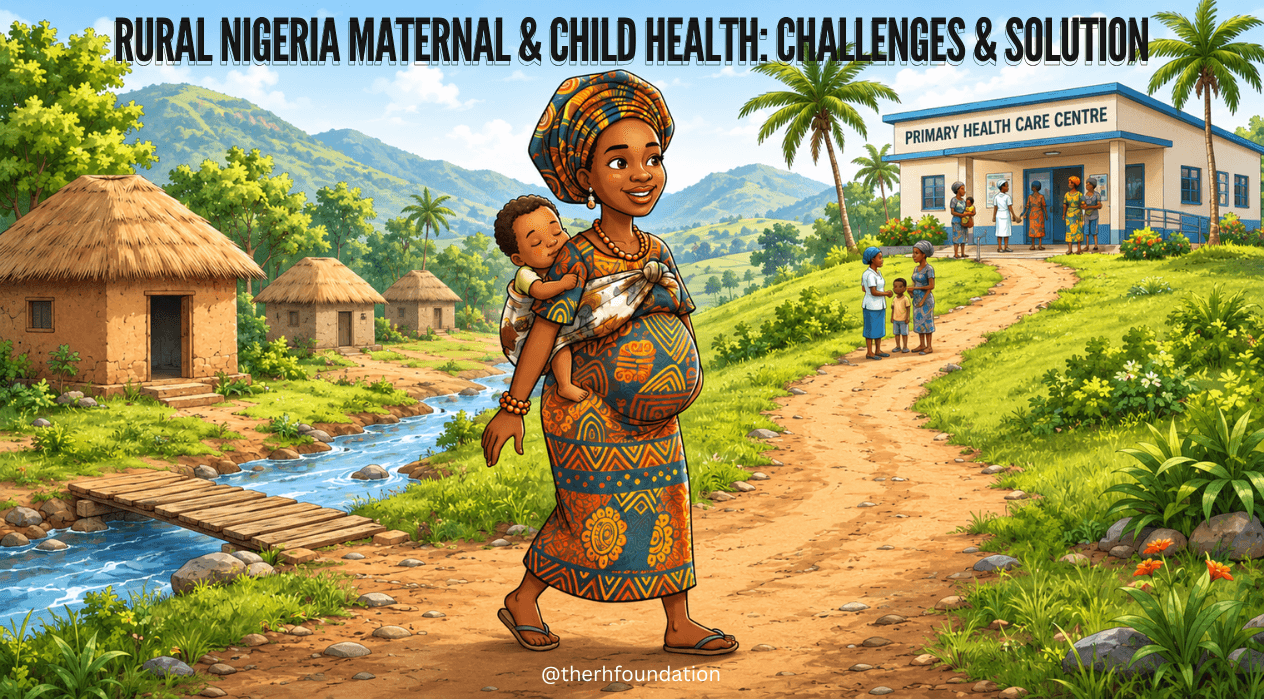
Nigeria is one of the countries with the highest maternal mortality rates in the world, and the women dying are not dying randomly across the population. They are dying overwhelmingly in rural communities where the nearest health facility is hours away, where that facility is often understaffed or undersupplied, and where the formal health system has consistently failed to meet women where they live. These deaths are not inevitable, and they are not acceptable, but they keep happening because the factors driving them are well understood, frequently discussed, and persistently underfunded.
Why the Numbers Stay High
The causes of high maternal mortality in rural Nigerian communities are not mysterious. Distance is the most immediate barrier, and it is not just a physical one. When a woman in labour has no reliable transportation, when reaching care requires negotiating with family members who may not share her urgency, and when the nearest functioning facility is an hour away on a road that floods during the rains, every stage of accessing care becomes a potential point of failure. Researchers describe this through the three delays model: delay in deciding to seek care, delay in reaching care, and delay in receiving care. Most rural Nigerian communities face all three simultaneously.
Skilled birth attendance remains a critical gap for similar reasons. A significant proportion of births in rural communities happen at home without a skilled attendant, not because women prefer it that way but because the skilled attendant is not available to them. This is a distribution problem, not a cultural one, and it mirrors the teacher shortage in rural schools in ways that are not coincidental: the people who can provide the service are consistently not where the service is needed most.
Antenatal care coverage also remains low, not because women are unaware of its value, but because attending four or more visits during a pregnancy requires time, transportation, money, and flexibility that many rural women lack.
What Community Health Workers Actually Do
Community health workers are not a new idea, but the evidence for what they can achieve when properly trained, adequately supported, and genuinely embedded in the communities they serve has grown considerably stronger. In the context of maternal health, they serve as the bridge between a formal health system that cannot reach every community and the pregnant women who cannot always reach the formal health system.
They identify pregnant women early, before complications develop. They provide health education that helps women and families make informed decisions about antenatal care, nutrition, and danger signs. They accompany women to facilities, directly reducing the delays that cost lives. They follow up after birth, catching postpartum complications before they become emergencies.
Critically, community health workers operate with a kind of relational authority that clinical professionals from outside the community rarely have. A woman who might not act on advice from a stranger at a distant clinic will often listen to a neighbour she has known for years, who grew up in the same community, who speaks her language, and who understands the pressures she is navigating without judging her for them. That relational credibility is not a soft benefit. It is a clinical asset, and it is the reason community health worker programs consistently achieve results that clinic-based interventions alone cannot reach.
What MCHI Is Building
The Maternal and Child Health Initiative is RHF's community health program, built on exactly this evidence base. Working in Gassa and Chit communities in Barkin Ladi Local Government Area of Plateau State, MCHI deploys community health workers to reach pregnant women who would otherwise navigate their pregnancies without consistent skilled support, tracking antenatal attendance, providing health education, identifying danger signs, and maintaining the kind of presence that builds the trust necessary for women to act on what they learn.
MCHI begins its second phase in Pankshin, Plateau State, expanding to two newly selected Primary Health Care Centres. This expansion follows months of stakeholder engagement, facility assessment, and community consultation, the kind of patient groundwork that development organisations sometimes skip in their eagerness to show results and that RHF has learned is the only foundation on which a sustainable program can actually be built.
What Would Actually Change the Numbers
Community health worker programs like MCHI are effective, but they are operating within a system that creates the problem they are trying to solve, and honesty requires naming that gap. Reducing maternal mortality at scale requires functional primary health care centres that are consistently staffed and supplied, because a community health worker who identifies a high-risk pregnancy needs somewhere to refer the woman to. It requires reliable emergency transportation and a health financing system that does not leave women making financial calculations in the middle of obstetric emergencies.
Nigeria has the resources and technical capacity to address all of these. What has been missing is the sustained political will and funder commitment to treat maternal mortality in rural communities as the emergency it is, rather than as a problem that gets discussed in conferences and addressed in pilots.
MCHI is one of those pilots, and the communities of Gassa, Chit, and soon Pankshin deserve more than a pilot. They deserve a system that works for them.
If you want to support maternal and child health in underserved Nigerian communities, we would love to hear from you.
Comments
Loading comments...