What Happens to a Girl Who Finally Gets Accurate Information About Her Body
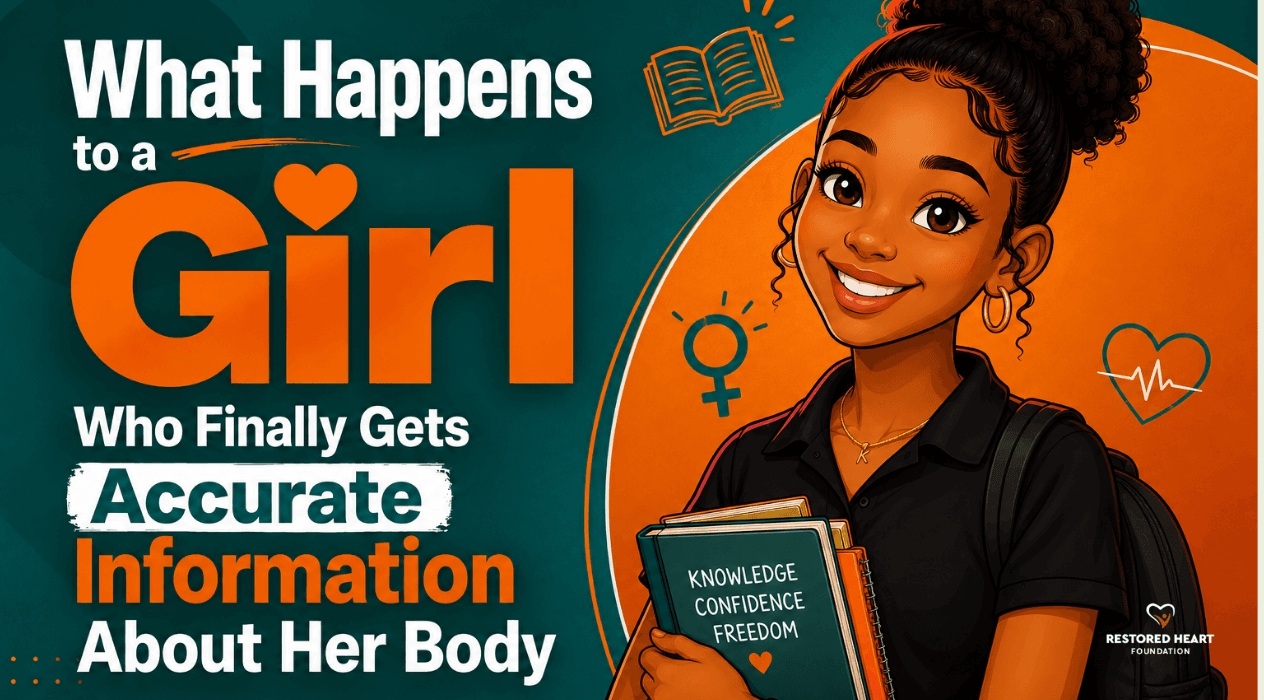
Fourteen-year-old Amina had never, until recently, had a conversation about her body with an adult that was honest, accurate and without shame, and she is not unusual in this. She is, in fact, entirely the norm for millions of adolescent girls in rural communities across Nigeria, where sexual and reproductive health information is either absent, wrapped in myth, or delivered in tones that communicate very clearly that these are topics to be endured in silence rather than genuinely understood.
Amina is fictional, but her situation is not, and what happens to a girl like her when she walks into her first Sexual and Reproductive Health Rights session and someone finally tells her the truth about her body is one of the most quietly transformative things development work can make possible.
What Girls Are Usually Told Instead
When accurate information is absent, something always fills its place, and in rural Nigerian communities that something is rarely helpful. It is filled by older girls who are themselves misinformed, passing on myths they received as facts because nobody ever corrected them. It is filled by community narratives that frame menstruation as dirty or spiritually dangerous, teaching girls to hide a normal biological process rather than manage it with dignity. It is filled by a silence so total that a girl grows up learning the lesson underneath the lesson: that her body is not something she is supposed to understand, ask about, or discuss with the adults around her.
The consequences are not abstract. Girls who do not understand their own bodies cannot recognise when something is wrong with their health, are more vulnerable to exploitation by people who use their ignorance as leverage, and carry into adulthood a relationship with their own physicality shaped more by shame than by understanding. Information is not a guarantee against exploitation, but ignorance is a reliable precondition for it, and none of what these girls experience is inevitable. All of it is the predictable result of a decision, conscious or not, to keep adolescent girls uninformed about their own sexual and reproductive health rights.
What an SRHR Session Actually Gives a Girl
Sexual and Reproductive Health Rights (SRHR) sessions for adolescent girls are not just about biology, though understanding biology matters enormously. They are about giving a girl the language, knowledge, and relational context to understand her own experience and to advocate for herself within it.
A girl who understands her menstrual cycle can track it, prepare for it, and manage it without the confusion and distress that comes from having been kept in the dark. A girl who understands her reproductive rights is in a fundamentally different position in relationships and community contexts where her body and her future are often discussed and decided without her meaningful participation. And a girl who has been given accurate, respectful, non-shaming information about her body receives something beyond the content of what was taught: the message that she is someone worth informing, that her understanding of her own experience matters, and that the adults around her consider her capable of handling truth. That message, delivered consistently and with care, changes how a girl moves through the world.
Why This Is Worth Saying Out Loud
Through its SRHR sessions, RHF creates exactly this kind of space in the rural communities where it works, places where girls can ask the questions they have been carrying without an outlet and hear honest answers from trained facilitators who approach the conversation with respect rather than shame.
The need is urgent. Nigeria has one of the highest rates of adolescent pregnancy in sub-Saharan Africa, menstrual health education remains inconsistent across rural communities, and girls are growing up with fragmented or absent information about their bodies and their rights, with consequences that show up in school dropout rates, early marriage statistics, and the trajectories of entire communities. Girls who receive comprehensive SRHR education stay in school longer, delay pregnancy, and make more informed decisions about their health and their futures, and they become the mothers, health workers, teachers, and community leaders of the next generation with a different foundation from the one they were given.
That return is not just individual; it is generational.
So what happens to a girl who finally gets accurate information about her body? She becomes more than what the silence was designed to keep her, and in the communities RHF works in, that is the beginning of everything that comes next.
Comments
Loading comments...