How One Rural Nigerian School Became a WAEC Examination Centre
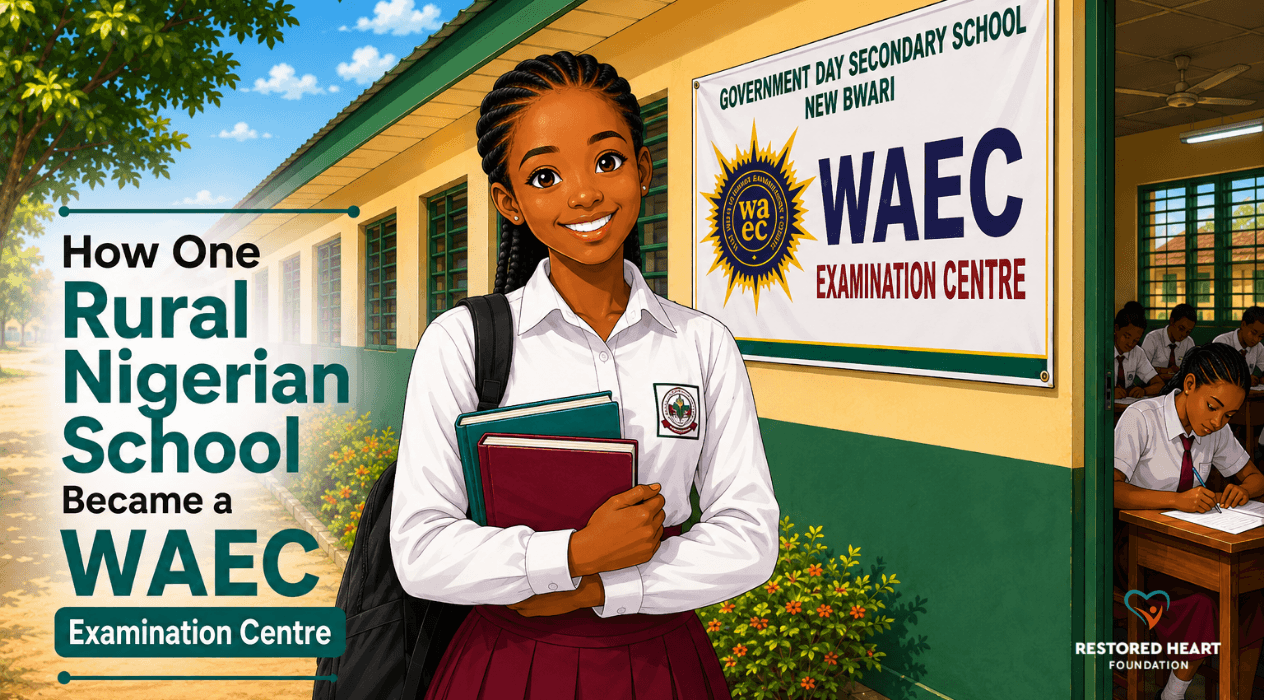
For years, students at Government Day Secondary School (GDSS) New Bwari sat for their final examinations elsewhere, in another community, making an avoidable journey, whilst their families had to find the money for it in the same week; they were already managing everything else that examination season brings. Some of them did not make the journey at all, and their results that year reflected an absence unrelated to what they knew. The journey was the problem, but the journey was never the real problem.
The Requirement Nobody Talks About
Getting a school to that point is harder than it sounds, because WAEC accreditation is not something a school applies for and receives. It depends on demonstrated capacity, which in practice means qualified teachers actually present and teaching the curriculum being examined, and that is exactly the requirement that most rural Nigerian schools cannot meet, not because the students are not there or the buildings are not standing, but because the teachers are somewhere else.
This is the quiet reason so many rural students travel to sit examinations that should be available to them where they live, and any intervention that does not solve for teachers is not going to change that, no matter how much else it improves.
What Four Years Actually Looks Like
RHF's Teacher Bank Project (TBP) has been working at GDSS New Bwari for four years, and the premise was straightforward from the beginning: if the conventional system cannot reliably place and keep qualified teachers in rural schools, build a different system that can. TBP placed qualified teachers, provided the support that made staying viable rather than punishing, and kept showing up long after most interventions would have moved on to the next thing.
Four years is a long time to stay in one place, and it needed to be, because the school community at New Bwari had spent years watching organisations arrive with intentions and leave before those intentions became anything durable. Trust does not return on a schedule, and the only argument that worked was the accumulation of consistent terms, each one adding to a pattern that eventually became undeniable. Students who entered the school in one year were still being taught by qualified teachers the next, and the year after that, and the year after that, and that continuity is what learning actually requires to compound into results.
The WAEC centre accreditation came out of that accumulation, and there was no single moment where anyone could point at something specific and say that was the thing that did it, which is the honest and slightly unglamorous truth about how durable change actually works.
What the School Looks Like Now
Students at GDSS New Bwari now sit their final examinations in their own school, in a community they know, without the transport cost and the unfamiliar building and the students who used to not make the journey at all. TBP is closing out at New Bwari because the point of the work was never permanent presence but a school that functions without needing us, and the WAEC centre accreditation belongs to the school now rather than to the program that helped it get there.
The teacher shortage that made New Bwari a school students had to leave to be examined is the same shortage that exists in rural schools across Nigeria right now, and the reason those schools have not become examination centres is almost always the same: the qualified teachers who would make them examinable are somewhere else. That problem is solvable, and New Bwari is what solving it looks like when someone stays long enough to see it through.
New Bwari is one school. How many more are waiting for someone to stay long enough to see it through?
Comments
Loading comments...